
Processing and transport: In the weeks leading up to an election, the USPS implements “extraordinary measures” — including special pickups and expedited handling — to facilitate the processing and delivery of ballots as quickly as possible. The 2026-2027 Official Election Mail Guide (known as Kit 600) directs election officials to use First-Class Mail for all outbound ballots for the fastest service and highest visibility. Officials are encouraged to use serialized Intelligent Mail barcodes (IMb) on every piece, enabling near-real-time tracking of individual ballots through the postal network.
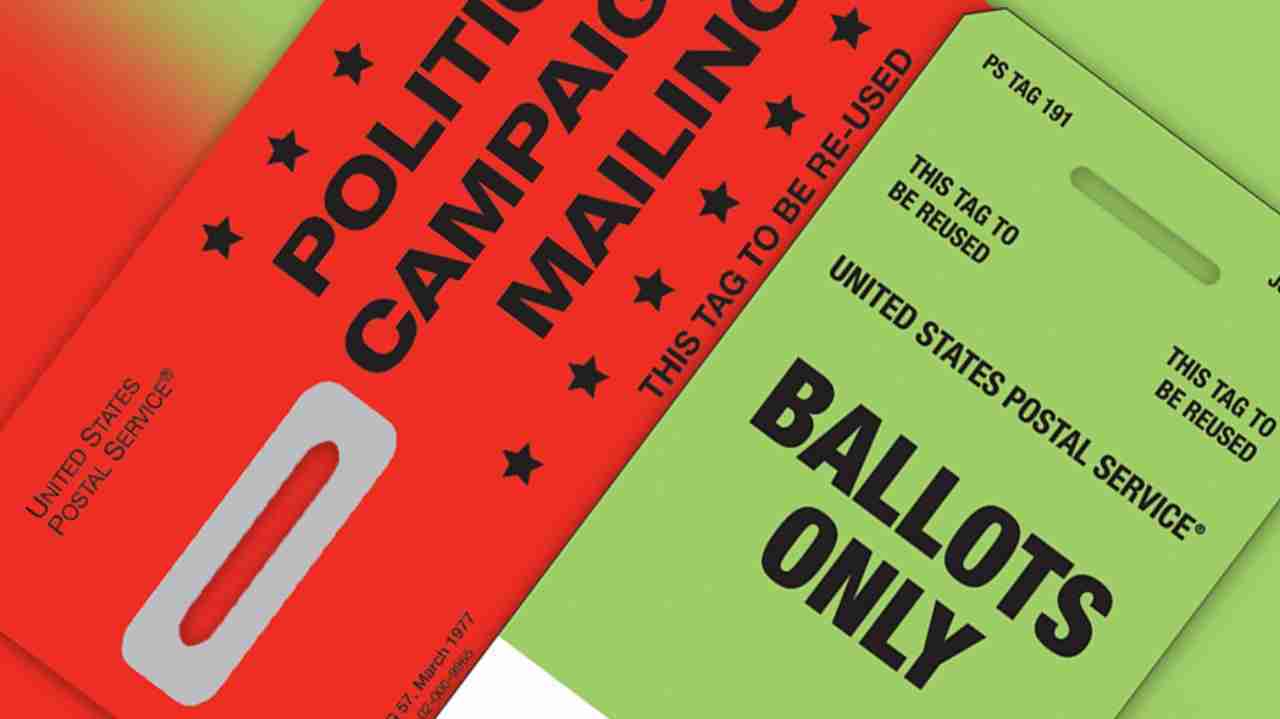
Security: All election mail is protected under federal law. The U.S. Postal Inspection Service (USPIS) — the law enforcement arm of the USPS — monitors election materials to prevent theft, tampering, and fraud. Green Tag 191, affixed to all trays and sacks containing ballots, signals to postal workers that the contents require priority handling.
Postmarking: Many states use postmarks to determine whether a ballot was cast by the legal deadline, though the USPS recently clarified that postmarks were never intended to represent a record or proof of the date on which a piece of mail was posted. The USPS has a policy of attempting to postmark every return ballot envelope; however, importantly, regional consolidation means mail may not always receive a postmark on the same day it is collected — which is why voters who need a date-specific postmark should request one in person at a USPS retail counter. They should also make a plan to send their ballot back with plenty of time, ideally at least one week before Election Day or the day it is required to be received by their election office if that date falls after Election Day.