
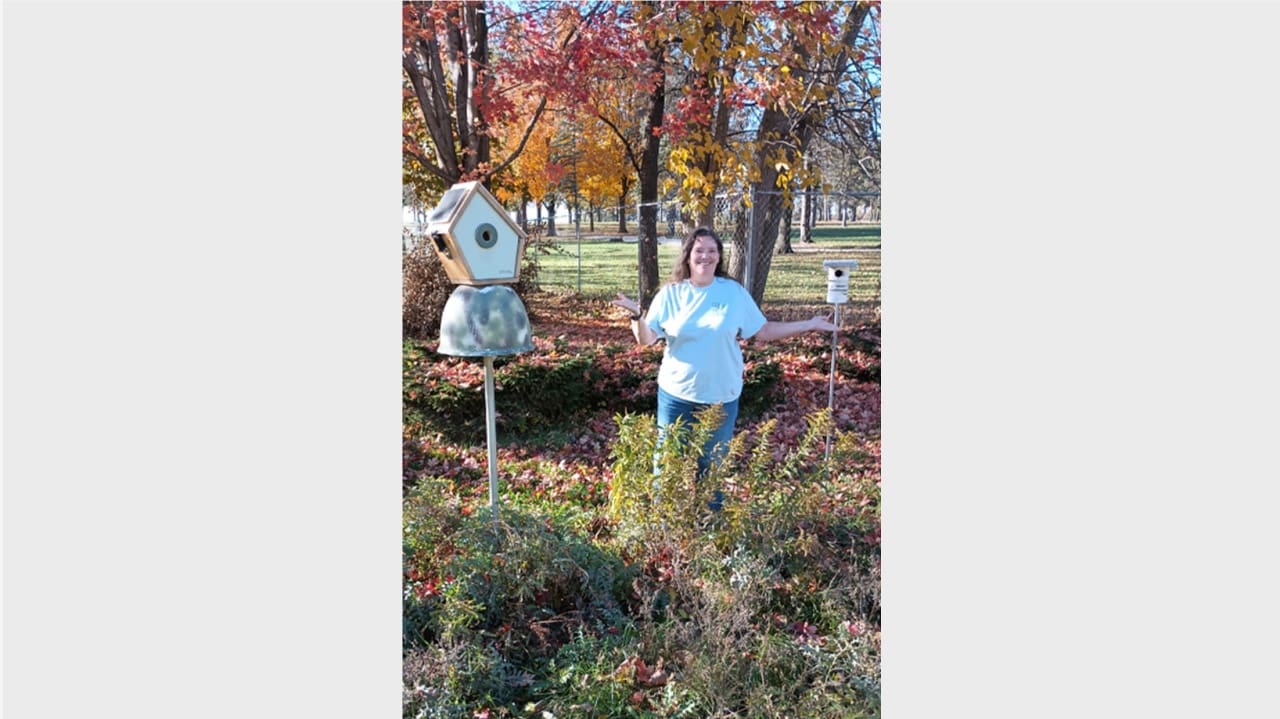
My name is Stacy Shuda and I’m a solutions architect for the Postal Service’s architecture, strategy and innovation group, which is part of the chief information officer’s organization in Eagan, MN.
When I’m not at work you might find me monitoring bluebird nest boxes as a citizen scientist, providing data to groups such as the Bluebird Program of Minnesota, the North American Bluebird Society and the Cornell Lab of Ornithology.
In 2017, I began monitoring the birds in my back yard to provide data for FeederWatch, an app that collects data on birds.
During the pandemic, I saw a new neighbor checking on a nest box he set up in his yard and he told me about bluebird trail monitoring.
Conservationists began setting up nest boxes far and wide several decades ago to counteract habitat loss for secondary cavity nesters such as bluebirds. Careful monitoring over time has shown that birds thrive better in some years than others. Badly timed or excessively harsh winter storms, for example, can have a detrimental effect on populations.
My husband and I were delighted to take over trails from monitors who were getting too old to do the once- or twice-weekly checks. Some of our boxes are out on country roads, and some are near open lawns, such as golf courses or athletic fields. We report on the number of nesting attempts, eggs laid, eggs hatched and fledglings leaving the nest.
The bluebirds stand on top of the boxes scanning for insects in the grass to feed to their chicks. Eggs take about two weeks to hatch, and within the next three weeks, the babies grow almost as large as their parents.
In four seasons, we have recorded almost 300 fledglings on our relatively small trail of around 20 nesting sites.
I’ve learned a few things in my time as a monitor. For example, while pesticides may be an effective tool for humans, insects are a crucial source of protein for baby birds. Fewer insects can mean fewer birds. And invasive species can out-compete native bluebirds by destroying eggs, hatchlings and even adult females.
I’ve recently begun to set up educational tables at community events to share my enthusiasm for birds. Birding is my favorite way to indulge my passion for nature, and it helps balance all the time I work indoors at a computer.
Add your first comment to this post