
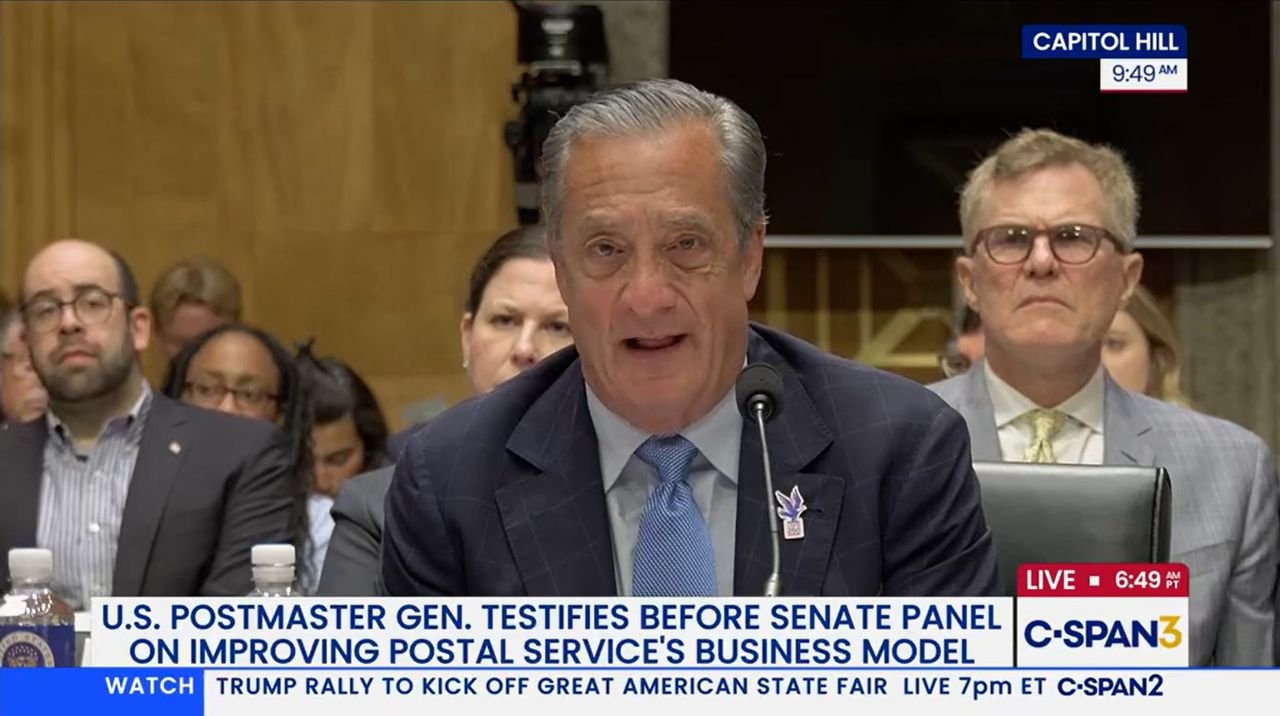
A Senate hearing this week on the finances of the United States Postal Service (USPS) laid out the framework for a sweeping attack on one of the oldest public institutions in the country. Under the guise of “reforming” USPS’s supposedly “broken business model,” senators and postal management discussed cutting delivery days, closing post offices, outsourcing work, raising prices, attacking workers’ compensation and eliminating regulatory restraints on management.
The hearing underscored the urgency of an independent fight by postal workers, developing rank-and-file committees to mobilize the broader working class in defense of the post office as both a workplace and a democratic institution.
Postmaster General David Steiner, a former CEO of Waste Management who took over USPS last year, claimed that USPS is “out of cash” and that Congress must either pay for the universal service mandates imposed on the agency or allow management to “shed” them. In his written testimony, Steiner declared that USPS had accumulated nearly $31 billion in cumulative defaults through fiscal year 2025 and was “borrowing from our employees’ retirement funds to continue operations.”
You said:
Is a company borrowing from employee pension funds good for a business
From Google Gemini:
Borrowing directly from an employee pension or 401(k) fund is generally not good for a business and carries severe financial, legal, and operational risks.The U.S. Postal Service (USPS) cash flow crisis cannot be solved by internal cost-cutting alone. The agency suffers from a structural mismatch between its legal mandates and its revenue. Because first-class mail volume has plummeted, its current self-funding model is broken.Postmaster General David Steiner testified to Congress that the USPS has temporarily staved off immediate insolvency by freezing non-essential spending, hiking stamp prices, and executing the exact strategy discussed previously—delaying payments to employee retirement funds. While this “borrowing” bought breathing room until 2031, it is a risky delay tactic, not a long-term solution.Solving the USPS cash flow crisis permanently requires a mix of aggressive legislative reform, operational pivot, and structural modernization.