
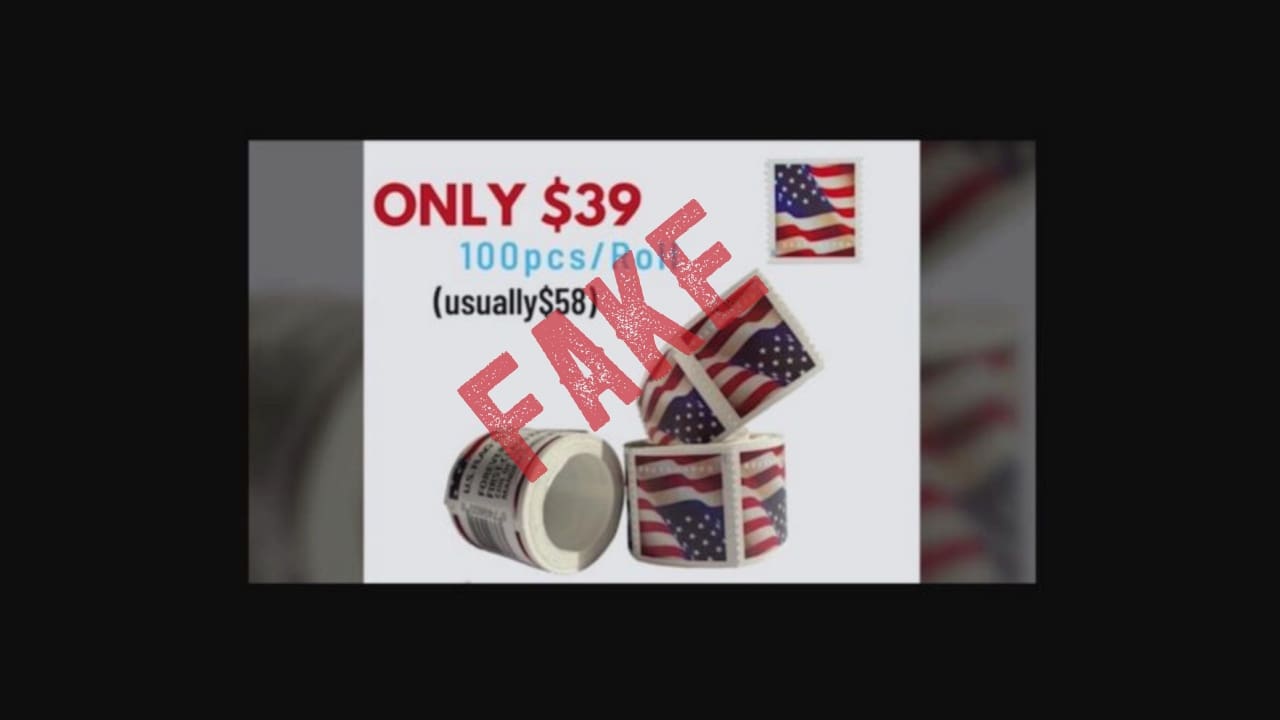
Washington, DC – The U.S. Postal Inspection Service is warning consumers about counterfeit postage being sold online. This crime threatens both the integrity of the U.S. Mail and the people who put their trust in this 250-year-old American institution. As part of the Postal Inspection Service’s mission to protect postal employees, consumers, and the nation’s mail system, U.S. postal inspectors aggressively investigate schemes and scams involving counterfeit stamps and labels and pursue the criminals responsible for producing and distributing these illegal materials.
Postal inspectors in the Postal Inspection Service’s Los Angeles Division identified thousands of packages with counterfeit labels entering the mailstream over an extended period of time. Although the subjects mailing the packages were using several different return names and addresses, postal inspectors identified and arrested Young Jiang and Lijuan “Angela” Chen as the people behind the thousands of counterfeit labels. The pair was responsible for more than $171 million in losses to the U.S. Postal Service. Jiang pled guilty in federal court to conspiracy, was ordered to pay $95,000 in restitution, and was sentenced to eight months in prison. Chen also pled guilty to federal conspiracy charges and was sentenced in July 2026 to two and a half years in prison.
New reporting mechanism
The Postal Inspection Service is offering a new reporting system that consumers can use to help combat these crimes. Consumers who suspect counterfeit stamp and postage fraud or revenue fraud schemes can visit the Counterfeit Postage Reporting System and provide known details. Reports gathered through this tool will give the Postal Inspection Service information for its investigative efforts and help to thwart those focused on fraudulently using the mail system.
Prevention tips:
While the Postal Inspection Service diligently pursues those who create, sell, and purposefully utilize counterfeit postage, consumers can follow these simple tips to avoid counterfeit postage stamps and labels:
- Don’t purchase discounted stamps or labels online, they are likely fake.
- If you are hired to reship packages for a company using their postage labels, it’s most likely a scam.
- If a package you ordered is not delivered because of counterfeit postage, report the seller to the Postal Inspection Service.
As a postal worker, I’m tired of watching USPIS congratulate itself for doing the bare minimum. It took the agency a year to replace an email inbox with a web form—and it still can’t show that it knows what to do with the tips.
Mail thieves are getting away with it, millions in losses go unrecovered, and when the watchdog offers basic fixes, USPIS rejects them. Then it rolls out a tip form and expects a round of applause. Give me a break.
People won’t keep trusting a Postal Service that can’t protect the mail or take its own failures seriously. That’s how you hasten its downfall: let the problems pile up, slap a press release on top, and call it progress.
Congratulations to the U.S. Postal Inspection Service. In 2026, a federal law-enforcement agency has apparently discovered the online tip form.
The self-congratulation here is almost beyond parody. Counterfeit postage is supposedly a “top mission priority,” yet until September 2025, USPIS was processing tips by email. Its shiny new reporting system then did little more than generate spreadsheets and count complaints by month and postage type. The OIG found no meaningful analysis of geographic hotspots or fraud patterns.
That same audit found that only nine of 44 cases presented to DOJ over five years were accepted for prosecution. USPIS identified $57 million in losses through its investigations but recovered just $572,250—about 1 percent. Its case-management system could not meaningfully track prosecutorial outcomes, while state, local and administrative remedies were largely ignored. When the OIG recommended three basic law-enforcement improvements, USPIS rejected all three—and the OIG found its responses unresponsive.
Now, less than two weeks after that humiliating audit, USPIS wants applause for announcing that the public can submit information through a website.
A web form is not a law-enforcement strategy. This is bureaucratic damage control from an agency announcing that the public can now send it information it has already demonstrated it does not know how to analyze, convert into prosecutions or use to recover stolen revenue.
This is not innovation. It is incompetence with a press release.