
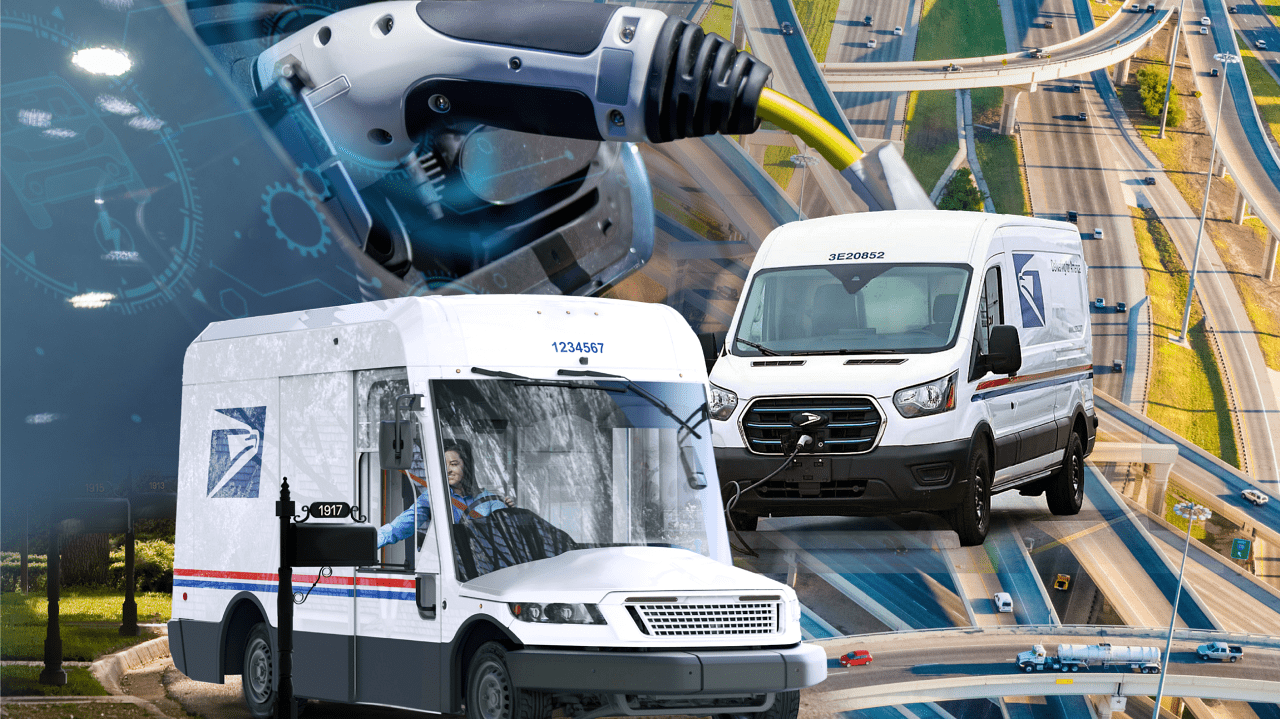
- For more than a decade, the Postal Service has needed new delivery vehicles to replace its iconic Long-Life Vehicles (LLVs) and Flex-Fuel Vehicles (FFVs).
- The process to select, acquire, and deploy a custom Next Generation Delivery Vehicle (NGDV) took around six years longer than planned.
- While the Postal Service’s commitment to acquiring a significant number of electric delivery vehicles aligns with decisions made by other delivery organizations, USPS must deal with a variety of factors such as organizational needs, vehicle operational capabilities, financial resources, and regulatory environments that similarly situated organizations do not.
- USPS’s experience with EV investments offers key lessons for future large procurement efforts, including setting clear goals and timelines that align with market dynamics, securing funding early, and considering commercially available solutions when feasible.
- The EV rollout also highlights the need for effective coordination with external stakeholders and the benefits of balancing process transparency and risk management with timely execution.
Much of the Postal Service’s fleet of delivery vehicles has already surpassed its projected lifespan, and the cost of operating and maintaining this aging fleet has long presented problems for the agency. In 2014, USPS began acquiring and deploying a new fleet of Next Generation Delivery Vehicles (NGDVs).
Initially, USPS did not specify the NGDVs would be EVs. As the project progressed, and recognizing the financial and environmental benefits of EVs, the Postal Service decided a portion of the newly acquired NGDVs would be electric.
While the Postal Service has made notable progress in advancing a historic transformation of its delivery fleet, the process to select, acquire and deploy a custom EV has taken over nine years — three times longer than originally planned — from the beginning of the NGDV project to the delivery of the first electric NGDVs, which began serving delivery routes in 2024.
USPS’s commitment to EVs is comparable to similar decisions taken by other posts and delivery companies. However, while many others chose commercially available EVs, the Postal Service opted for a custom, right-hand drive vehicle that required close collaboration with suppliers and extensive testing. Ultimately, the agency tested 44 prototype vehicles from various manufacturers, adding considerable time to the process. In part, the Postal Service’s status as a public agency contributed to this more cautious acquisition approach.
Other factors played a role in slowing progress in NGDV acquisition and deployment. Statutory limits to borrowing and a lack of financial resources put USPS at a financial disadvantage relative to similarly situated companies. This became less of an impediment, however, when Congress provided $3 billion in funding for EVs and charging infrastructure as part of the 2022 Inflation Reduction Act, allowing USPS to shift goals again and commit to a majority-electric fleet. The vehicle deployment timeline was further extended when various factors delayed the rollout of charging infrastructure. These delays in vehicle deployment postponed expected cost savings resulting from EVs’ lower operating and maintenance costs.
There are lessons from the NGDV project that can be applied to future large procurement projects. The EV market has grown and evolved, and a greater variety of off-the-shelf vehicles that can meet a wider range of delivery needs are now available. In fact, the Postal Service has been evaluating new options on the commercial market that may accelerate the expansion of its electric fleet in the coming years. Starting with a defined intention to electrify the fleet could have streamlined the acquisition and deployment process, as well. Finally, a better balance between transparency, risk reduction, and timely action can improve process efficiency. Future projects may benefit from more focused acquisition processes that can yield faster results.
Tristan Dreisbach, Rick Schadelbauer, and John Althen contributed to this report.
Add your first comment to this post