
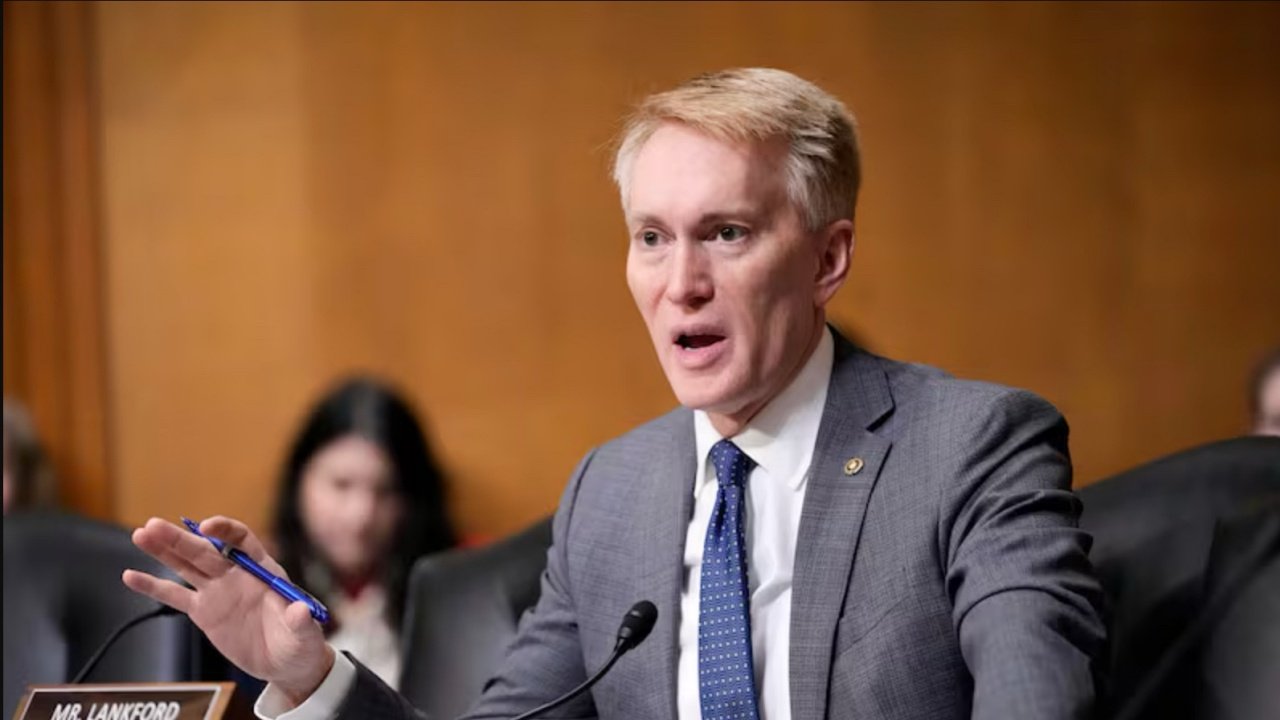
OKLAHOMA CITY, OK — US Senators James Lankford (R-OK) and Ted Budd (R-NC) are urging the US Postal Service (USPS) to maintain its prohibition on mailing marijuana following the Drug Enforcement Administration’s (DEA) decision to reclassify “medical” marijuana as a Schedule III controlled substance.
You can read the letter HERE or below:
Dear Postmaster General Steiner,
We write to bring your attention to a pressing matter. As you know, in April, the Drug Enforcement Administration (DEA) published a final rule that moved “medical” marijuana from Schedule I of the Controlled Substances Act (CSA) to Schedule III.
Under the CSA, Schedule III drugs have a lower potential for abuse, a currently accepted medical use, and a moderate or low physical dependence or high psychological dependence. DEA relied on the fact that many states call marijuana “medical” as evidence to support a currently accepted medical use.
Many concerns have been raised about the consequences of rescheduling marijuana. A growing concern is whether Schedule III marijuana will become a mailable item under United States Postal Service (USPS) regulations. It is our understanding that marijuana cannot currently be mailed at all using the USPS. However, some states are under a different impression. Georgia’s Access to Medical Cannabis Commission recently took steps to declare that medical marijuana can be shipped using USPS and private carrier services.
While Georgia does not have the authority to alter current USPS regulations, we are concerned that USPS will alter its regulations to allow for these shipments. We strongly oppose any effort to allow the shipment of marijuana.
Although “medical” marijuana is classified as a Schedule III drug, it is unlike any other Schedule III drug. Inhaled marijuana and marijuana edibles are not an FDA approved prescription drug. The DEA rule put significant weight on state licensing schemes as proof that the marijuana being sold is safe and medicinal. This trust in state licensing schemes is not deserved. Some states have very low barriers to entry when it comes to being a licensed marijuana dispensary. At one point, Oklahoma had 9,178 licensed marijuana grow operations and 2,611 licensed dispensaries. While those numbers have come down, it is clear that state licensed participants must be funneling products across state lines and into the black market. USPS should not give these actors access to the mail.
Additionally, we should be concerned about the increased access to marijuana by young children. A recent study from Nationwide Children’s Hospital found that calls to US poison centers for drug ingestion among children under the age of six increased 3,307 percent between 2000 and 2024. Cannabinoids accounted for 85% of the ingestions. This study shows that despite being a controlled substance, marijuana is not at all under control in our country. Allowing the shipment of marijuana will potentially give more access to children.
Finally, while it may seem like marijuana is legal everywhere, Idaho and Kansas have not legalized it in any form. While bad actors find ways to funnel the drug into those states, the USPS should not facilitate the shipment of an illegal and controlled substance into a state that does not allow its use.
We look forward to continuing this conversation as USPS considers the impact of the final rule and urge USPS to maintain its current regulation that prohibits the shipment of marijuana.
(X)
Background
Lankford has consistently raised concerns about efforts to reschedule marijuana and the public safety implications of expanding the industry. In September 2023, he urged the Drug Enforcement Administration to keep marijuana classified as a Schedule I controlled substance. In July 2024, he also challenged the Biden Administration’s proposed rescheduling rule, raising concerns about the scientific evidence supporting the change and its potential consequences.
In 2026, Lankford introduced the No Deductions for Marijuana Businesses Act to prevent marijuana businesses from claiming federal tax deductions and credits following rescheduling. He has also pressed the Treasury Department on the potential tax implications of the policy change.
Add your first comment to this post