
The unique hybrid entity known as the U.S. Postal Service — part business, part federal agency — had been in operation for roughly four years by 1975 and, like its new eagle emblem, was looking forward and poised for flight.
The 1970s saw advances in automated mail processing, and USPS worked with business mailers to educate them on maximizing compatibility with new sorting machinery. More than a dozen rules were changed at mailers’ behest to increase their participation in presorting — or “work-sharing.”
The efforts paid off.

Innovative products such as the Address Change Service for periodicals (1985) and the National Change of Address program (1986) also helped speed and streamline the mail.
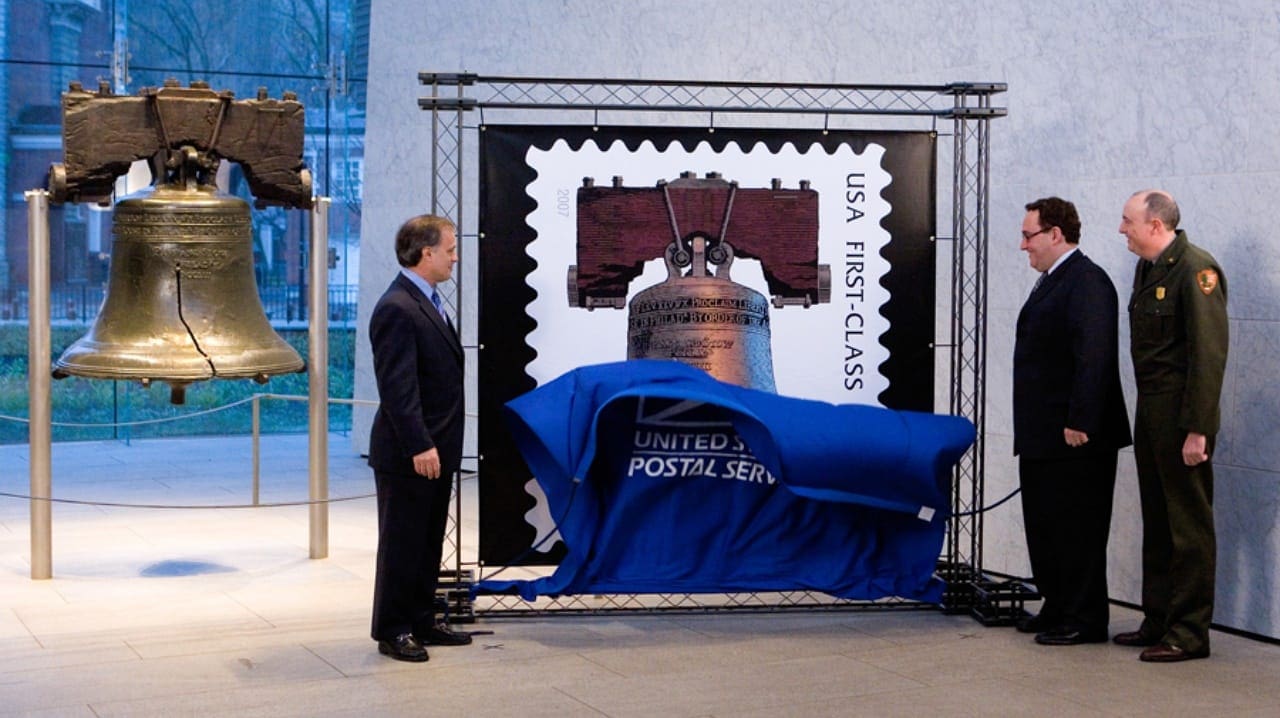
This 50-year period saw many advances in the world of philately. In 1978, USPS released its Harriet Tubman stamp — the inaugural issue of the now-long-running Black Heritage stamp series. The organization’s first semipostal stamp, Breast Cancer Research, debuted in 1998, and its first Forever stamp was released in 2007.
For decades, the bold experiment known as the U.S. Postal Service thrived, with volume reaching 208 billion mailpieces by 2000.
But storm clouds were on the horizon.
The 9/11 terrorist attacks caused delivery disruptions nationwide, shortly followed by the U.S. Mail being used to send letters laced with anthrax, a deadly bacterium. Five people were killed in the mailings, including Postal Service employees Joseph Curseen and Thomas Morris.
In 2006, Congress passed the Postal Accountability and Enhancement Act, which — by many accounts — hobbled the organization and caused deeper deficits than the ones it was designed to remedy.
The law required USPS to prepay retirees’ health benefits 70 years into the future, a fiscal burden no other agency was required to take on. That prepayment mandate — combined with the rise of email, the drop in First-Class Mail and the Great Recession of 2008 — contributed to a growing deficit.
Another hit came in 2020 with the COVID-19 pandemic. As the world shut down around them, Postal Service employees rolled their sleeves up, put on masks and got on with processing and delivering letters — and increasingly, packages — to homebound customers.
That year also saw the appointment of Louis DeJoy as the 75th postmaster general. DeJoy brought his extensive experience in the logistics field to bear to launch Delivering for America, a 10-year plan to improve USPS service and achieve financial stability.
The 2021 plan created a new template for postal operations across the country, moved to upgrade its aging fleet, and put a premium on workplace stability.
In 2022, USPS celebrated the passage of the Postal Reform Act, which abolished the prepayment burden mandated by the 2006 law and provided the organization with billions of dollars to upgrade long-neglected facilities.
The storm clouds were starting to lift.
By the end of 2024, USPS had made substantial inroads in Delivering for America’s ambitious aims.

When I entered the Post Office work full time I had no Post Master to help me with setting up anything. She said find it out yourself.Sad to say that was her response.