
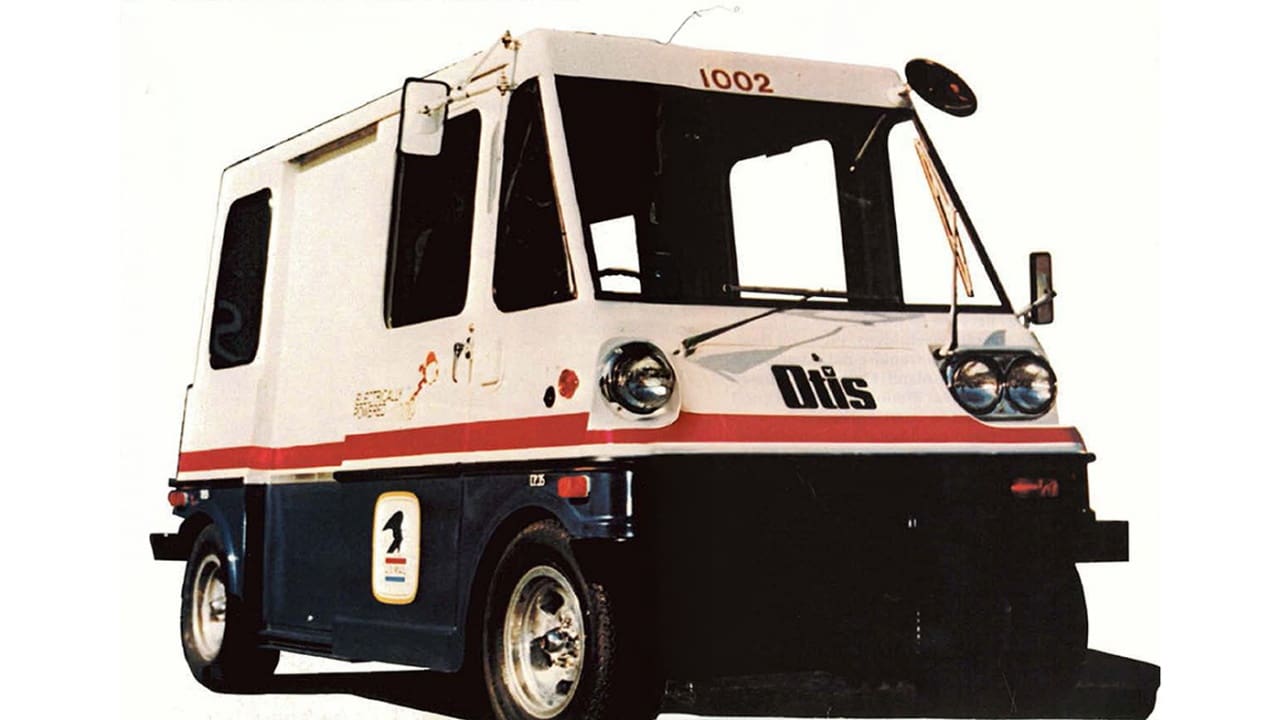
In the 1970s, fresh off the moon missions and eager to show the American public that investing in space exploration was still relevant during the lull between the Apollo program and the launch of the first shuttle, NASA went all in on educating the country about the benefits of pushing past orbit.
Specifically, NASA wanted to show citizens there was civilian bounty to be had beyond Tang and astronaut ice cream. To this end, it launched the Spinoff program in 1976. It highlighted technologies that had been developed for space travel but were also paying dividends even for those unable to slip the surly bounds of Earth.
Enter the U.S. Postal Service. In partnership with NASA’s Lewis Research Center, an Otis P-500 electric mail van had its lead-acid power pack swapped for nickel-zinc, which was then tested extensively alongside the small crop of lead-acid electric vehicles being produced by boutique manufacturers in the mid-1970s. This was effectively the first EV to be “built” by NASA, even if it was primarily responsible for its power source.
The results were encouraging if seemingly modest by today’s standards: The van could travel as far as 55 miles per charge provided that speeds were kept at 20 mph, which was nearly double what the van was capable of when powered by its lead-acid setup. NASA also stuffed its nickel-zinc battery into a Cooper Electric Town Car in another series of tests in partnership with the Energy Research and Development Administrating that further demonstrated the superiority of the chemistry (with range increases of up to 101 percent documented).
Add your first comment to this post