
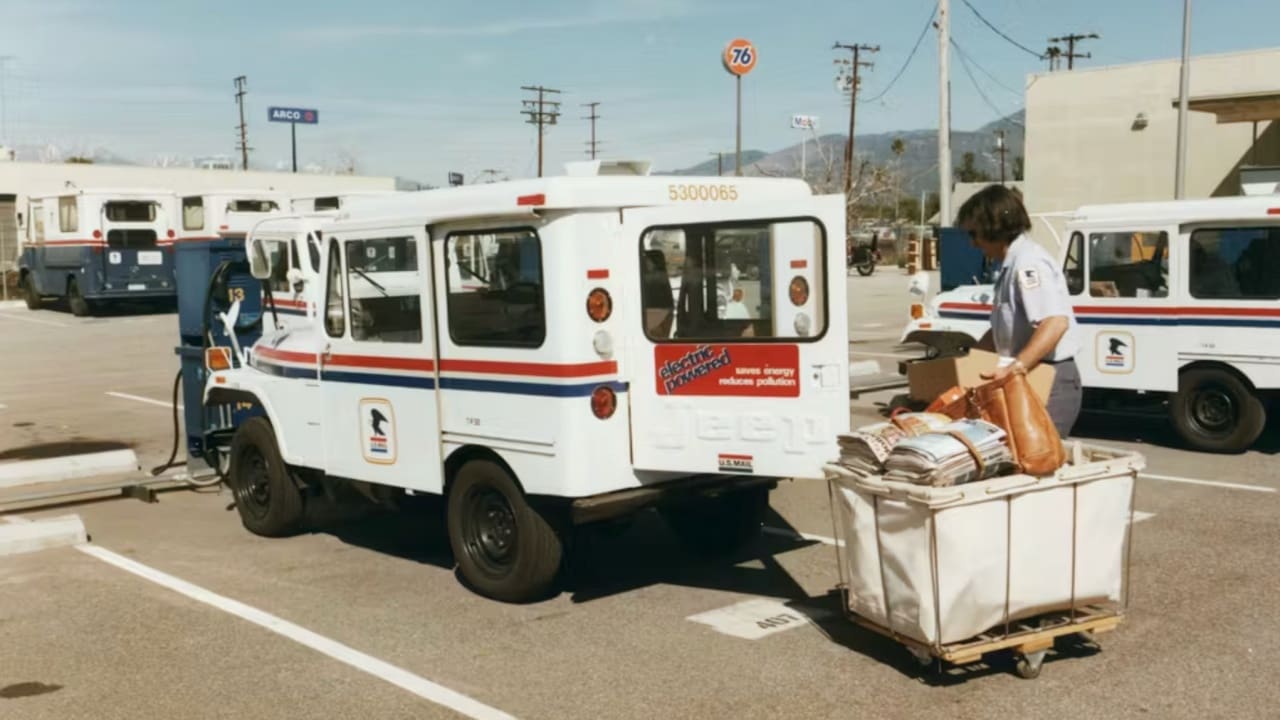
Electric automobiles have existed since the late 1800s, and while they had a flash of market share back in the early days of the automobile, it hasn’t been until the last 15 years that the technology has really taken off. But tracing the roots of the first modern, practical, or mainstream EV is difficult, especially when most of the qualifiers are subjective.
Some benchmarks, like the 2012 Nissan Leaf, 2008 Tesla Roadster, and the 1997 General Motors EV1 are obvious. However, the history of modern EVs can be traced back even further. Arguably, the first modern, production EV from a major automaker was the 1974 AM General DJ-5E Electruck.
An obscure battery-powered postal Jeep may seem like an unlikely starting point for the EV revolution, but in many ways it is a forgotten milestone.
The United States Postal Service began testing electric delivery vehicles from various manufacturers across the country. In Cupertino, California, which was plagued by air pollution and smog, the regional Post Office eventually purchased 30 battery-powered vehicles from Harbilt Electric Trucks, an English manufacturer that specialized in milk delivery vans. While usage was limited to dense, low-mileage, urban routes on relatively flat terrain, the results were positive. Along with being cleaner, the EVs were also cheaper to operate than the gasoline-powered Jeep DJ-5s already in use
Add your first comment to this post