
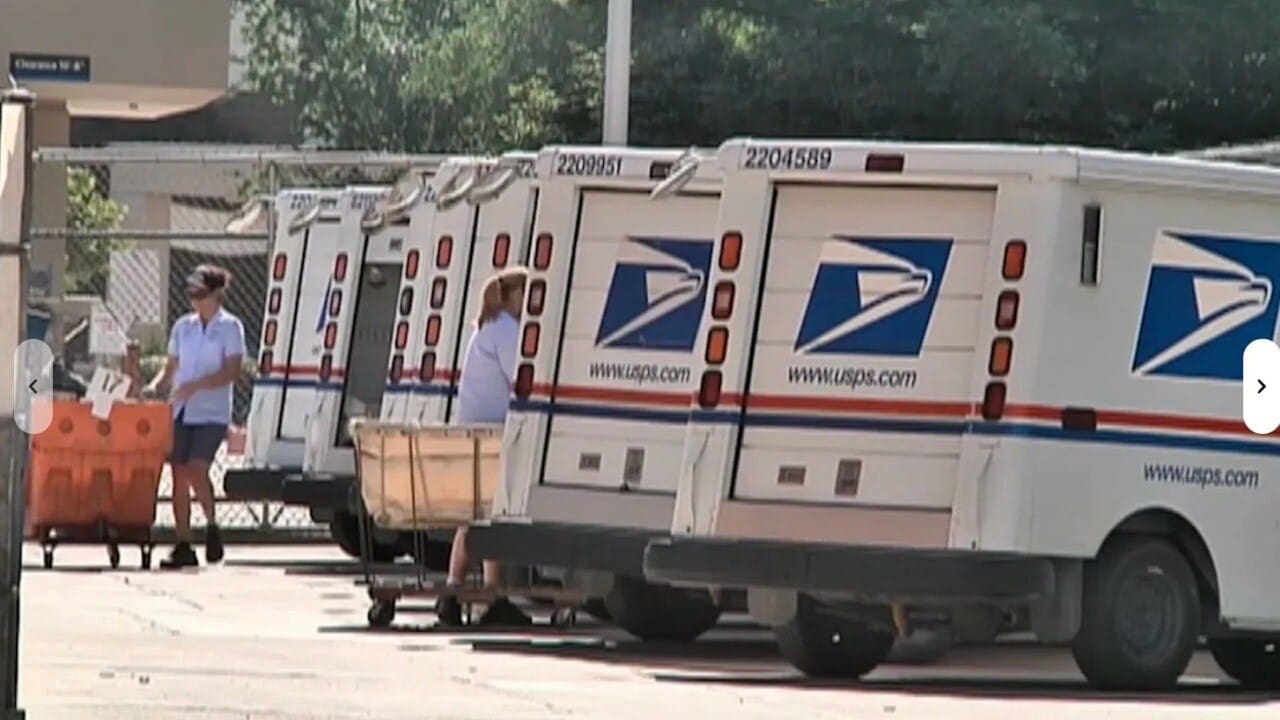
ST. LOUIS, Mo. (First Alert 4) – The U.S. Postal Service (USPS) is preparing a major reshuffling of more than a thousand delivery routes across the St. Louis area.
According to local postal carriers and internal memos posted inside stations, the St. Louis USPS Installation will require roughly 1,100 routes and carriers in St. Louis city and St. Louis County to rebid their assignments, specifically in the 631xx zip codes. One local carrier, who asked to remain anonymous, told First Alert 4 the change feels devastating for many longtime employees.
“It’s just not fair, man. Some of us have been on our routes for a long time, and we’ve grown to know our customers,” the carrier said. “For it to kind of be stripped away from us… I don’t think it’s fair for us other 1,000 carriers that have to do this.”
The change is triggered by local union rules after several routes were recently consolidated by USPS management. The reposting of routes is required when even a small number of routes are consolidated or significantly modified. Under the Local Memorandum of Understanding (LMOU) tied to Article 41 of the USPS and National Association of Letter Carriers (NALC) national agreement, any carrier with less seniority than the affected route must enter a new bid cycle.
According to internal memos, that means every carrier hired after May 23, 1998 must rebid, choosing to keep their current route or compete for another. Senior carriers receive priority and may switch routes, which can force newer carriers into different territories as assignments shift. The anonymous postal worker said that’s what worries many on the floor.

It’s completely fair and non greivable too. Too many carriers that are NALC members don’t know the contract and cry wolf when things don’t go their way. It’s seniority down bud and always has been. One way management gets over on carriers is because the carriers don’t know the contract; when something like this happens then they raise hell and cry that it’s not fair. The LMOU has a lot to do with it too as far as how many percentage of stops is lost. This is got to be a common practice in lots of districts moving forward.